


Social Skills Group for Teens in Puget Sound

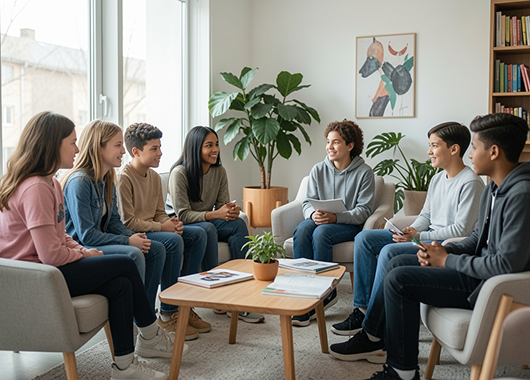
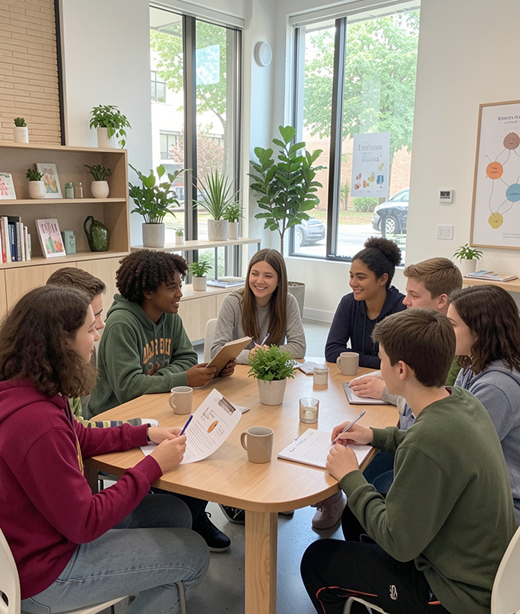
Our fellowship-trained pediatric specialists lead structured social skills groups built on the evidence-based PEERS® curriculum. Teens learn how to make and keep friends, then practice it with peers who understand, so they leave with real-world confidence.

What Is a Social Skills Group?

When a Social Skills Group Can Help

When a teen wants connection but finds the social world hard to navigate, structured instruction can make the difference. Our group offers focused support for adolescents who:

  • Want Friendships: Hope to make or keep friends but are not sure how to start or sustain them.
  • Feel Disconnected: Experience isolation, social anxiety, or uncertainty around peers.
  • Are on the Autism Spectrum: Benefit from direct, structured social instruction designed with them in mind.
  • Find Cues Hard to Read: Struggle with conversation, conflict, teasing, or knowing what to say.

What the Group Teaches

A structured curriculum covering the core skills of teen friendship and connection.

01
Starting Conversations

How to begin, hold, and end conversations naturally, and how to find common interests with peers.

02
Making and Keeping Friends

Choosing good friends, being a good friend, and turning shared interests into lasting connections.

03
Joining and Hosting

Entering group conversations and activities gracefully, and planning successful get-togethers.

04
Handling Disagreements

Managing arguments and differences with friends in ways that protect the relationship.

05
Responding to Teasing

Practical strategies for handling teasing, rumors, and exclusion without escalating the situation.

06
Reading Social Cues

Recognizing the signals behind what peers say and do, and responding in ways that build trust.

What Sets Our Group Apart

A social skills group at Children’s BMC is more than a weekly meeting. Depending on your family’s needs, our approach includes:

  • Our group is based on the PEERS® curriculum 
  • Groups matched by age and developmental level so teens practice with the right peers
  • Caregiver guidance each week so parents can coach and reinforce skills at home
  • Clinicians who understand the “why” behind social challenges, not just the “what”
  • Coordination with schools and other providers when it supports your teen

How the Group Works: Step by Step

A process designed to set your teen up for success from the first session.

serpro-icon
Reach Out and Screen

A brief phone call helps us understand your child’s needs and determine whether the group is an appropriate fit.

serpro-icon
Join a Group

Groups run in structured cycles and meet weekly. They are intentionally small and matched by age and developmental level, so every teen practices alongside peers with similar goals and experiences.

serpro-icon
Learn and Practice

Each session pairs direct instruction with modeling and in-session practice tied to a weekly skill. Teens try the skill in a supportive setting before they need it at school or in their own social lives.

serpro-icon
Reinforce at Home

Caregivers receive guidance each week and at-home assignments help skills carry into real life. Our team stays in close contact with you throughout the cycle so progress continues between sessions.

How to Get Started

1. Call Us
2. Your First Appointment
3. Begin Care

A member of our team will talk with you about your child’s needs, help identify the right service, and answer any initial questions. No referral needed. Call us at (253) 256-3626 or email admin@childrensbmc.com.

We begin with an intake or consultation to understand your child’s history, gather information, and learn what matters most to you and your child. Bring any school evaluations, IEP/504 plans, past evaluations, or report cards you have – but if you don’t have anything, that’s fine too.

Whether you’re starting an evaluation, therapy, or a skills group, we guide you through each step and keep you updated throughout the process. We’re collaborative from day one – a partner in your child’s journey.

If you’d like details about insurance, fees, what to expect, and frequently asked questions, you can learn more at Get Started.

free-intake-call
About Commitment
How to Start

Frequently Asked Questions

The group follows the PEERS® curriculum, which is designed for teens and adolescents. During an initial call we confirm that your child’s age and goals are a good match, and if a different service fits better, we point you there.

PEERS® is an evidence-based social skills curriculum developed at UCLA. It teaches teens how to make and keep friends, hold conversations, expand social opportunities, and handle teasing or bullying, using direct instruction, practice, and caregiver support.

Yes. PEERS® was extensively studied with adolescents on the autism spectrum, and many participants in our groups have autism, ADHD, or related profiles. Our clinicians have significant experience supporting these teens.

That is common and usually eases quickly once they meet the group. We create an encouraging, low-pressure environment where every teen can participate at their own pace and feel comfortable from the first session.

We match participants by age, developmental level, and goals to create a supportive and effective group experience where teens are practicing with the right peers.

Pricing varies based on time and complexity. We are happy to walk you through the details during an initial call so you have a clear picture before you begin.

We are not contracted with insurance, but many families still receive reimbursement depending on their plan. In some cases, out-of-network exceptions may allow in-network reimbursement rates. We are happy to provide the information you need to check your coverage and can answer any cost-related questions during your initial call.

Call or email our team to ask about upcoming groups, complete a brief screening, or join a waitlist. There is no referral needed and you can reach out any time you have a question.

Children’s Behavioral Medicine Collaborative

Ready to Support Your Child?

You don’t have to figure this out alone. We’re here to help.

footprint img
phone icon