Autism Evaluation for Children and Teens in Puget Sound, WA

If you have questions about your child's social development, communication, or behavior, a comprehensive evaluation can provide the clarity your family needs. Our experienced pediatric neuropsychologists conduct thorough assessments that go well beyond a checklist, helping you understand your child's unique profile, strengths, and the support that will make the biggest difference.

What Is Autism and How We Evaluate It?

parents-teaching-girl-read

What We Assess in an Autism Spectrum Disorder Evaluation

A detailed examination of social communication, development, and behavior across multiple settings and contexts.

01
Social Communication and Reciprocal Interaction.

We observe your child's ability to initiate and respond to social interaction, their use of gestures and eye contact, and how they understand social cues. Social communication differences are a core feature of autism spectrum disorder.

02
Verbal and Nonverbal Communication.

We assess lhow effectively your child uses communication in social contexts.

03
Play and Imagination.

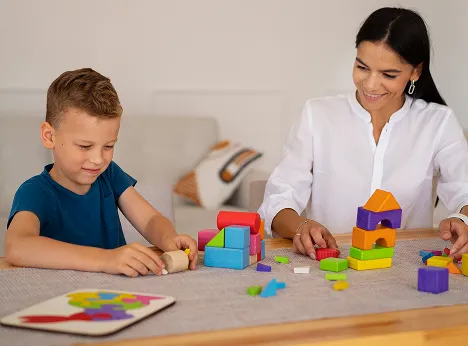
We observe your child's play behaviors, use of imagination, and how they engage with toys and objects.

04
Behavioral Patterns and Sensory Responses

We examine whether your child exhibits restricted interests, repetitive behaviors, sensory sensitivities, and behavioral rigidity. These characteristics help clarify your child's autism presentation.

05
Cognitive Abilities and Overall Functioning.

Depending on your specific concerns, we may assess general intellectual functioning, academic readiness or performance, and how your child's cognitive profile interacts with social and behavioral concerns.

06
Emotional and Behavioral Functioning.

We may evaluate anxiety, mood, emotional regulation, and behavioral patterns to understand how these factors affect your child's daily functioning and whether additional conditions are present.

medium-shot-kid-cheating-school-test

Why We Take a Comprehensive Approach to Autism Evaluation

When a family comes to us with concerns about social communication, behavior, or development, we conduct an evaluation tailored to their specific needs. The ADOS-2 is one component of that evaluation, but we may also assess cognitive abilities, academic functioning, emotional wellbeing, and adaptive skills. This broader lens matters because:

  • Children with autism may also have ADHD, anxiety, learning differences, or language difficulties that need to be identified and addressed
  • Some children present with social difficulties that look like autism but are better explained by anxiety, ADHD, or a language disorder
  • Understanding your child’s full cognitive and emotional profile leads to more targeted, effective recommendations
  • School teams and providers need a complete picture to build the right support plan

Our individualized approach means you leave with clarity about what is and is not contributing to your child’s challenges, along with a detailed plan for moving forward.

How Does Autism Evaluation Work?

A process designed to understand your child and give you answers and guidance.

serpro-icon
Step 1: Intake Consultation

We meet with you and your child to listen to your concerns and understand their history. We ask about developmental milestones, how they communicate, how they interact with others, and what worries you most. This helps us understand the full picture and helps your child feel comfortable with us before any testing begins.

serpro-icon
Step 2: Comprehensive Testing

Our ADOS-trained clinician spends time playing and interacting with your child in a structured way, observing how they communicate, connect with others, and engage. It feels natural and play-based, not like a test. Your child also participates in cognitive, emotional, and functional assessments so we can understand social and developmental concerns within the larger context of how they think, learn, and manage daily life. Testing typically takes place over one to two sessions (2 to 3 hours each) in a supportive, one-on-one environment with built-in breaks.

serpro-icon
Step 3: Collateral Information and Observations

We gather input from you and your child's teacher about how your child functions across different settings. Autism can present differently at school versus home, so this information is essential for an accurate evaluation.

serpro-icon
Step 4: Analysis and Diagnostic Formulation

We integrate all information gathered during the assessment, including ADOS results, cognitive and emotional testing, clinical observations, and parent and teacher input, to put together a comprehensive picture of your child's functioning and identify appropriate diagnoses.

serpro-icon
Step 5: Feedback, Recommendations, and Next Steps

We explain evaluation results in clear language and make sure to answer any questions you or your child have. We provide recommendations for services and resources that can help your child feel successful, including school supports, therapies, community resources, and strategies you can use at home. You receive a detailed written report summarizing the evaluation and outlining specific recommendations.

How to Get Started

1. Call Us
2. Your First Appointment
3. Begin Care

A member of our team will talk with you about your child’s needs, help identify the right service, and answer any initial questions. No referral needed. Call us at (253) 256-3626 or email admin@childrensbmc.com.

We begin with an intake or consultation to understand your child’s history, gather information, and learn what matters most to you and your child. Bring any school evaluations, IEP/504 plans, past evaluations, or report cards you have – but if you don’t have anything, that’s fine too.

Whether you’re starting an evaluation, therapy, or a skills group, we guide you through each step and keep you updated throughout the process. We’re collaborative from day one – a partner in your child’s journey.

If you’d like details about insurance, fees, what to expect, and frequently asked questions, you can learn more at Get Started.

free-intake-call
About Commitment
How to Start

Frequently Asked Questions About Autism Evaluation

We conduct autism evaluations for children as young as 2 years old through adolescence and early adulthood. The ADOS-2 has modules designed for different developmental levels. Early identification is beneficial, but autism can be identified at any age. Some children, particularly girls and those with subtle presentations, are not identified until school age or later.

Yes. Children on the autism spectrum span the full range of cognitive abilities. Some are intellectually gifted, others have intellectual disability, and many have average intelligence. Cognitive level does not determine whether autism is present. Children with average or above-average intelligence may have subtle social communication differences that are overlooked in less comprehensive evaluations.

The ADOS-2 (Autism Diagnostic Observation Schedule) is the research-supported standard assessment tool for autism. Unlike rating scales or checklists, the ADOS involves direct clinical observation and structured interaction to assess your child’s social communication and behavioral patterns in a standardized way. All of our clinicians are formally trained in ADOS administration, which allows us to provide reliable, evidence-based autism diagnoses.

Yes, but girls on the autism spectrum are often identified at a later age than boys. Girls may present with different behavioral profiles, develop strategies to mask social difficulties, have interests that do not fit the stereotypical autism profile, or show subtle social communication differences that are easily overlooked. Our clinicians are trained to recognize autism across all presentations and specifically understand how autism may appear differently in girls.

An autism diagnosis helps your child access school services and accommodations they may be eligible for. Our evaluation report provides the documentation schools need and includes specific recommendations for classroom support, social skills programming, and communication strategies. We regularly work with school teams across the Puget Sound area to help ensure your child receives appropriate support.

Autism frequently co-occurs with ADHD, anxiety, learning disabilities, and language differences. A narrow autism-only assessment may miss these contributing factors, which means your child might not get all the support they need. Our individualized neuropsychological evaluation may assess multiple areas  including cognitive abilities, academic skills, emotional functioning, and social communication, so we can identify everything that is affecting your child and make targeted recommendations.

We have designed the entire experience with children in mind. Before any formal testing begins, we take time to help your child feel at ease. The ADOS is play-based and interactive, and your child can take breaks whenever they need them, bring a comforting item, and have access to snacks. Our clinicians explain what they are doing throughout the process and are there to help if anything feels frustrating.

We are not contracted with insurance, but many families still receive reimbursement depending on their plan. In some cases, out-of-network exceptions may allow in-network reimbursement rates. We are happy to provide the information you need to check your coverage and can answer any cost-related questions during your initial call.

Because we conduct an evaluation tailored specifically to your child’s needs, pricing varies reflective of time and complexity. Call us at (253) 256-3626 for a cost estimate based on your child’s needs. We also offer financial assistance for families who need it.

Children’s Behavioral Medicine Collaborative

Do you have concerns about your child’s social success?

Our team can discuss whether an evaluation is the right next step and answer any questions about the process. Many families aren’t sure where to start, and that’s completely normal. We’re here to help you figure it out.

footprint img