


Table Of Contents
- Key Takeaways
- What Is an IEP Evaluation, and Who Can Ask for One?
- Step-by-Step: How to Request an IEP Evaluation in Washington State
- What Happens If You Disagree With the School's Evaluation
- Requesting an Independent Educational Evaluation (IEE)
- When to Consider a Private Neuropsychological Evaluation
- Serving Families Across the Puget Sound
- Ready to Get Your Child the Support They Need?
Need Guidance for Your Child?
Our team is here to help you better understand your child’s needs and guide you toward the right support.

Share This article


If you suspect your child needs extra support at school, Washington State parents can request an IEP evaluation by submitting a written request to their school district, and the district is legally required to respond within a set timeline. You do not need a diagnosis, a doctor’s referral, or the school’s permission to start this process. Any parent who has a concern about how their child learns, behaves, or functions in the classroom has the right to ask.
This guide walks through exactly how to request an evaluation, what happens after you submit it, and what your options are if you disagree with the results your school district provides.
Key Takeaways
- Any parent, teacher, or professional can request an IEP evaluation in writing at any time, no referral required.
- Once a school district receives your written request, Washington law currently gives it 25 school days to decide whether to evaluate your child, though OSPI has proposed shortening this to 20 school days through pending rulemaking.
- Under a newer state law, ESHB 2557, effective June 11, 2026, districts must complete the evaluation report within 35 school days of your written consent and give you a copy at least 5 school days before the eligibility meeting.
- The eligibility determination meeting must be held between 5 and 40 school days after you sign the consent, and if your child qualifies, the IEP must be developed within 30 calendar days after that meeting.
- If you disagree with the school’s evaluation, you can request an Independent Educational Evaluation (IEE), which starts a 15-day response clock for the district.
- A private neuropsychological evaluation can strengthen your case for services, clarify a diagnosis, and give your family answers that the school evaluation may not provide.
Note: These evaluation and eligibility timelines changed under ESHB 2557, which took effect June 11, 2026. If your child’s evaluation was already underway with consent signed before that date, the district may still be finishing it under the prior rules. Any evaluation requested from this point forward follows the two-stage timeline above.
What Is an IEP Evaluation, and Who Can Ask for One?
An IEP evaluation is the formal process a school district uses to determine whether a child qualifies for special education services under an Individualized Education Program. It looks at how a child’s cognitive, academic, behavioral, or developmental functioning affects their ability to access their education.
Washington school districts operate under a legal principle called Child Find. Districts are required to identify every child within their boundaries, from birth through age 21, who may have a disability affecting their learning. Because of Child Find, a district cannot legally wait for a diagnosis before evaluating a student. A parent’s written concern is enough to start the process.
Parents, teachers, school counselors, pediatricians, or other professionals who work with a child can all initiate a request. In practice, most requests come directly from parents who notice a gap between their child’s effort and their child’s academic or behavioral progress.
Step-by-Step: How to Request an IEP Evaluation in Washington State
Step 1: Put Your Request in Writing
A verbal request to a teacher is a good first step for raising concerns, but it does not start the legal timeline. To formally trigger the district’s obligations under WAC 392-172A, submit your request in writing. Address it to the school principal and the district’s special education director or coordinator. Your letter should include:
- Your child’s full name, date of birth, and current grade
- A clear statement that you are requesting a special education evaluation
- Specific concerns you have observed (reading difficulties, attention struggles, social challenges, emotional regulation, and so on)
- Any relevant background, such as prior testing, medical diagnoses, or teacher feedback
- Your contact information and the date
Step 2: Deliver and Document Your Request
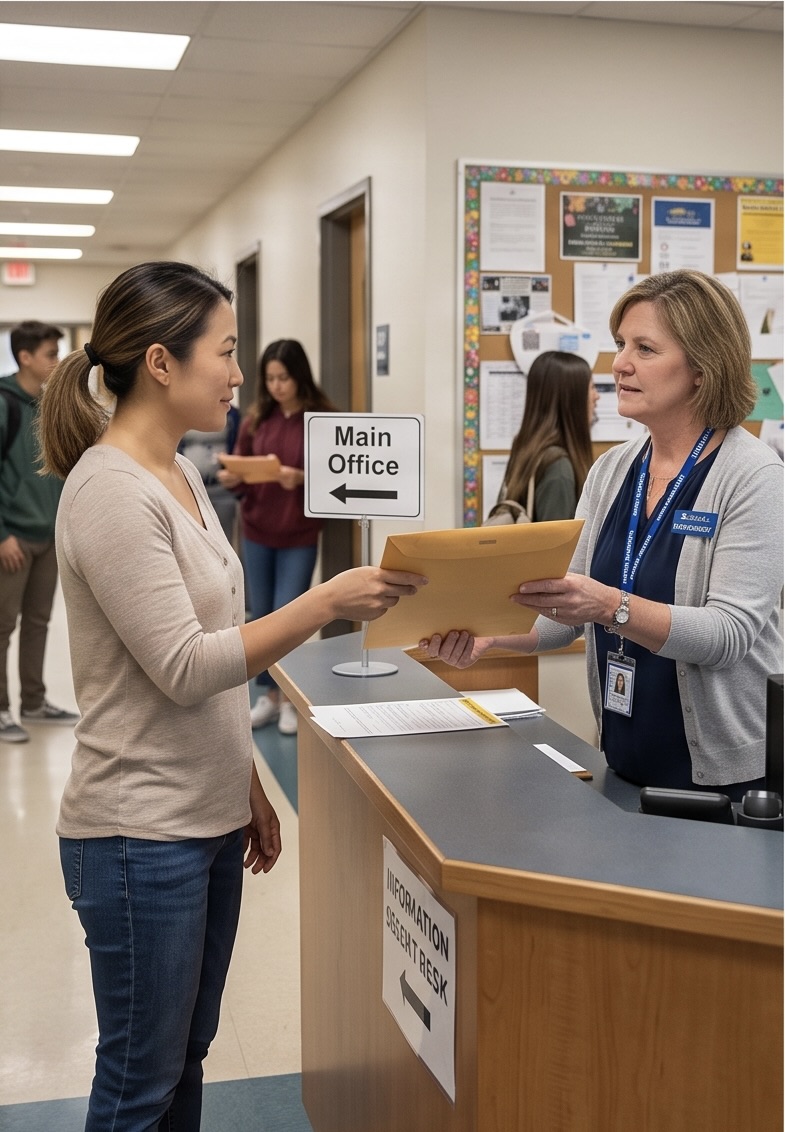
Hand-deliver the letter and ask for a signed receipt, mail it with return receipt requested, or send it by email and request a read confirmation. Keep a dated copy for your own records. This documentation matters if the district misses a deadline or if you later need to escalate.
Step 3: Wait for the District’s Decision
Once the district receives your written request, it has 25 school days to decide whether to proceed with an evaluation. The district must respond in writing, either agreeing to evaluate or explaining why it is declining.
Step 4: Provide Consent for Testing
If the district agrees to evaluate, you will be asked to sign a consent form. The evaluation timeline does not begin until your consent is on file, so return this paperwork promptly if you want the process to move forward without delay.
Step 5: Evaluation Report, Eligibility Meeting, and IEP Development
Washington updated this part of the process under a 2026 state law, ESHB 2557, so the timeline now works in two stages rather than one:
- Evaluation report: The district has 35 school days from your signed consent to complete the evaluation report and give you a copy you can keep, either on paper or as a saved electronic file. A quick screen-share during a meeting does not satisfy this requirement.
- Eligibility determination meeting: The district must then meet with you to review the report and decide whether your child qualifies. This meeting must happen no sooner than 5 school days after you receive the report, and no later than 40 school days after your consent was signed. You can voluntarily waive the 5-day waiting period in writing if you want to meet sooner, but you cannot be asked to waive your right to receive the report itself.
- IEP development: If your child is found eligible, the district must hold a meeting to develop the IEP within 30 calendar days of the eligibility determination meeting, not the date the report was written.
These timelines are set by state regulation and can only be extended if you and the district agree to it in writing, with the reason for the extension documented. If your district misses a deadline without your agreement, that is worth raising directly with the special education office, or with the Office of the Education Ombuds, which provides free, neutral help to families navigating special education disputes.
What Happens If You Disagree With the School’s Evaluation
A school evaluation does not always tell the full story. School psychologists often manage large caseloads, and their testing may focus narrowly on eligibility rather than a comprehensive picture of your child’s strengths and needs. If the results do not match what you are seeing at home, or if the district decides your child does not qualify for services, you have options.
Requesting an Independent Educational Evaluation (IEE)
Parents who disagree with a district’s evaluation can request an Independent Educational Evaluation, often shortened to IEE. This request should also be made in writing, and it starts a 15-day clock for the district to respond.
The district has two options once it receives your IEE request. It can agree to fund an outside evaluation at public expense, or it can file for a due process hearing to defend its own evaluation as appropriate. If the district does not request a hearing within 15 calendar days, it must pay for the independent evaluation.
You, not the district, choose the provider who conducts the IEE. This is an important right. It means you can select a clinician with the specific expertise your child’s situation calls for, such as a pediatric neuropsychologist trained in ADHD, autism, or learning disorders. Washington’s parent training center, PAVE, offers free guidance for families navigating this process.
When to Consider a Private Neuropsychological Evaluation
Some families do not wait for a dispute with the school before pursuing outside testing. A private pediatric neuropsychological evaluation can be a strong complement to the school process, whether you are preparing to request an IEP, building support for a reevaluation, or seeking an IEE.
A comprehensive neuropsychological evaluation goes beyond eligibility checklists. It examines cognitive ability, attention and executive function, academic skills, memory, and social-emotional functioning to build a complete profile of how your child thinks and learns. That level of detail can give schools clearer direction for accommodations and can help you advocate more effectively in IEP meetings, especially for children whose challenges are subtle or overlap multiple areas, such as attention difficulties that look like anxiety, or learning gaps that mask an underlying processing difference.
Because these evaluations are conducted independently of the school district, the findings can also serve as documentation if you later decide to request an IEE or push back on a school’s eligibility decision.
Serving Families Across the Puget Sound
Children’s Behavioral Medicine Collaborative works with families throughout the region, navigating the IEP and IEE process, from our Tacoma office and through families we support near Seattle, Bellevue, Gig Harbor, and Olympia. Wherever you are in Washington State, the request process and legal timelines described above apply the same way, since they are set by state regulation rather than by individual district policy.
Ready to Get Your Child the Support They Need?
Navigating a school evaluation, or deciding whether to request an IEE, can feel overwhelming without a clear roadmap. Our fellowship-trained pediatric neuropsychologists can help you understand your child’s testing results, prepare for an IEP meeting, or pursue an independent evaluation that gives you real answers.
You can request an appointment online to talk with the Children’s Behavioral Medicine Collaborative team about your child’s next steps.